Interview with “Beyond the Line” Director Adrien Jeannot
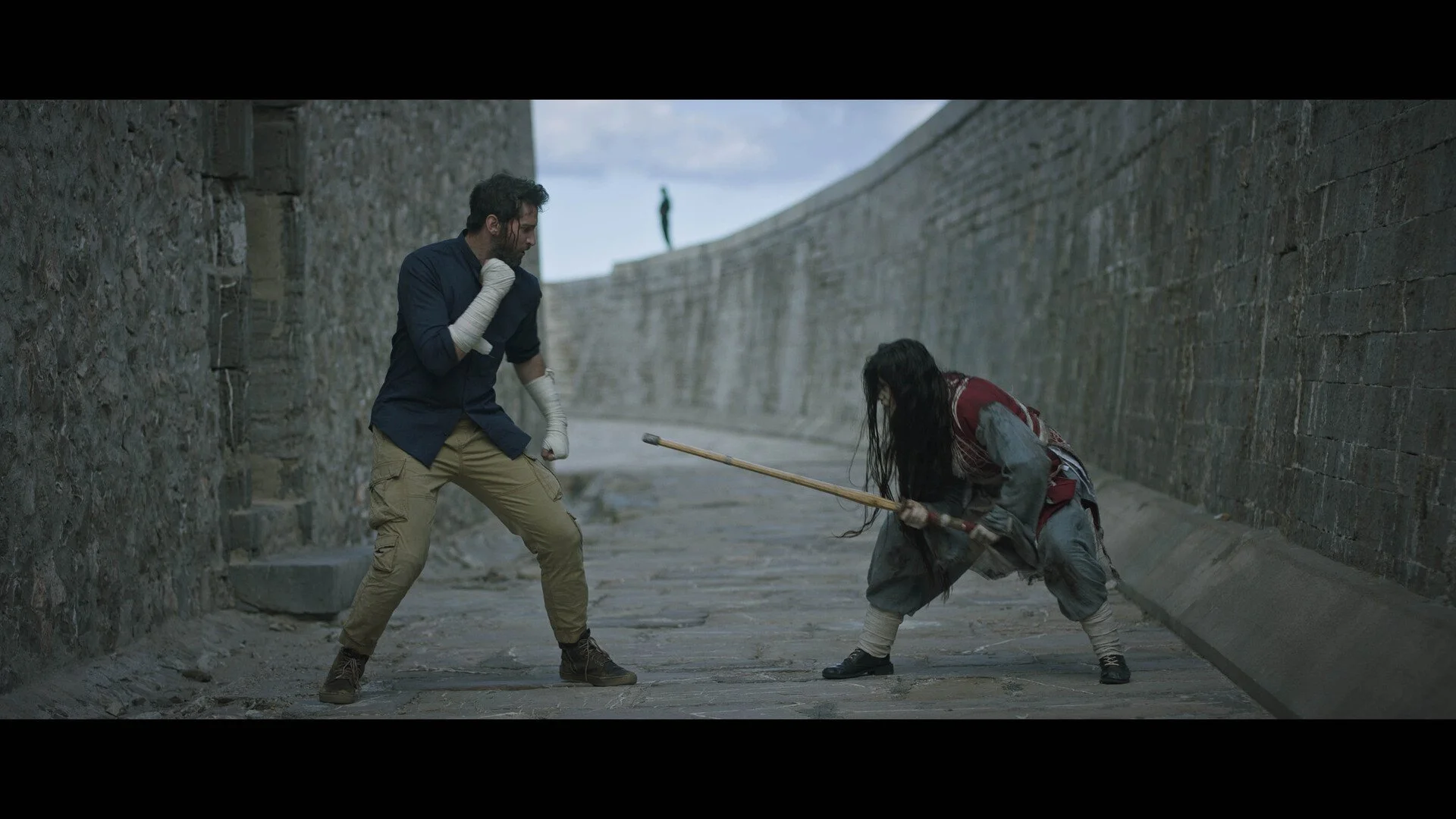
Adrien Jeannot is the writer-director behind Beyond the Line, an Action Film that critiques voyeurism and social media. Beyond the Line is set offshore, where fighters meet, where they fight without boundaries, for money and to entertain social media. Beyond the Line was screened last year at Fighting Spirit Film Festival’s 10th Anniversary.
Jeannot is a French Director, who in 2021 founded Azur Films. Jeannot is highly influenced by genre cinema and has directed several short films.
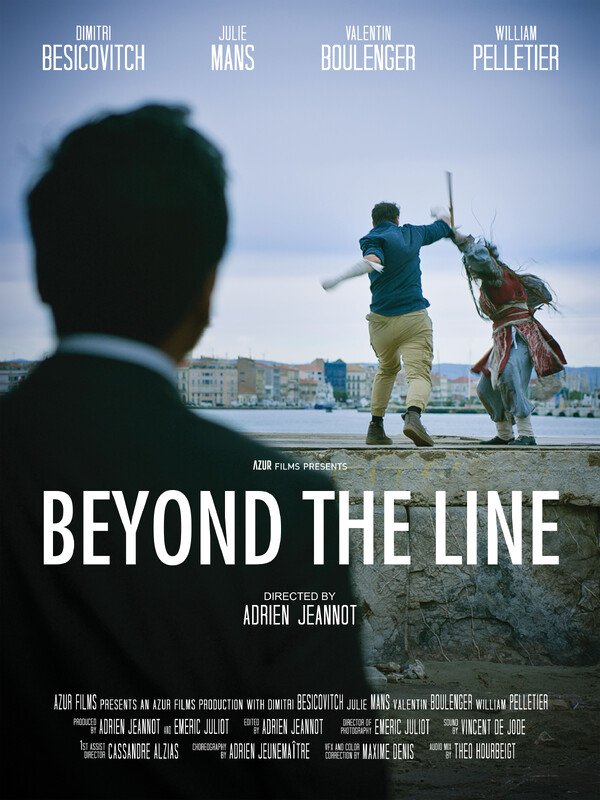
Image Courtesy of Adrien Jeannot
Describe yourself in three fictional characters:
Eastwood in For a Few Dollars More. A man of few words with a plan. You know, in the final duel scene, he brings the watch that restarts the music for the grand finale and takes the dramatic tension of the scene to another level.
I think that's what directing is all about.
The other character I always think about is not from a feature film. In France, we had a TV commercial a few years ago for Canal+ where a bearskin rug was the main character. And he is the director of a feature film.
Since that day, I identify as a bearskin rug.
When I’m looking for good ideas for a script, it makes me feel like Daniel Day-Lewis in There Will Be Blood. I’m in the mud, searching for oil.
What was your introduction to filmmaking?
As a kid, I watched a lot of movies. I started making short films with my friends when I was eight. My father gave me a small camera for my birthday, a JVC GR60.
I think the movie that made me want to make films was Waterworld. I remember thinking, “If you can tell that kind of story with a camera so you can tell anything with cinéma.” The movie isn’t actually that good, but it has a special place in my life.
Later, I went to Film School.
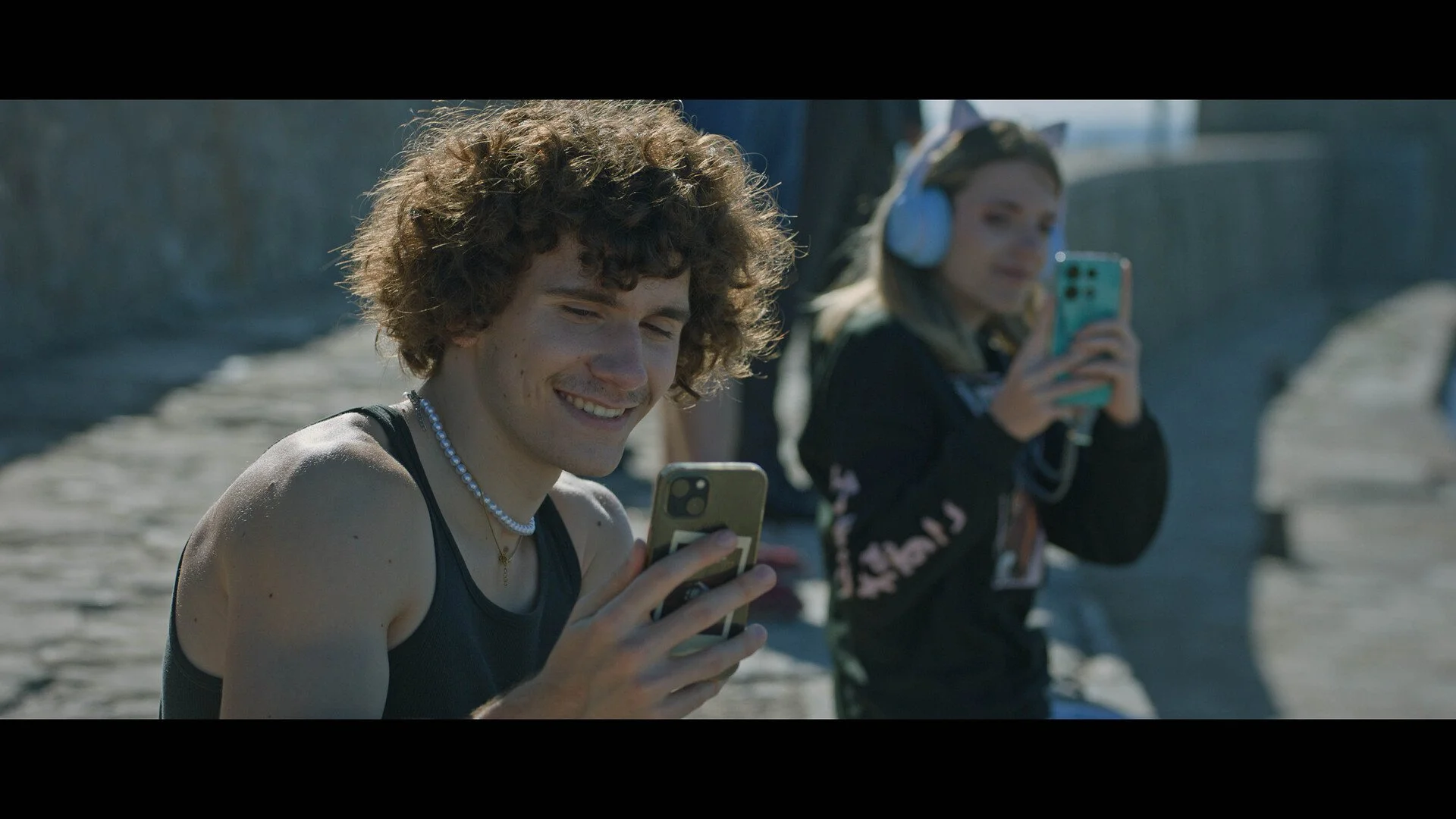
Image Courtesy of Adrien Jeannot
How would you describe your filmmaking styles and how did you develop your style?
I think my style is quite far from the kind of cinema that inspires me. I learned a lot from masters like Kurosawa and Tarkovsky. Their way of exploiting time, space, and movement is a major source of inspiration for me. In France, Bertrand Blier.
I like contrasts of tone, playing with very dramatic scenes and breaking them with slapstick humor. It’s a tone I’ve been working on for a long time, and it’s complicated to get right. But I think I improve with each film.
I also love taking the time on set to try something totally different and give the actors more freedom. I especially enjoy it during the editing process, exploring the narrative and the emotions that arise from improvised shots.
It often leads to surprising moments.
How did the story for Beyond the Line come about? What was your writing process?
I had the idea a long time ago, maybe eight years ago. At the time, I was thinking about making a series of very short episodes. Each episode would feature a different fight, with different fighters and techniques.
I wanted to shoot action in a very Hong Kong cinema style.
Years have passed, and social media has taken the place it now holds in our society. I thought it could be a good starting point for my old idea. How far are we going to consume this nonsense? … That said, I do love Instagram.
How did you do the casting for Beyond the Line, especially the casting of Julie Mans and Dimitri Besicovitch?
Dimitri is actually my brother-in-law. We’ve been working together for ten years, and over time, his career gradually shifted toward stunt work. Today, he works on the biggest French productions and has all the connections needed to make an action film.
The timing was perfect. He now lives with Julie, who specializes in sword fighting, which works for me!
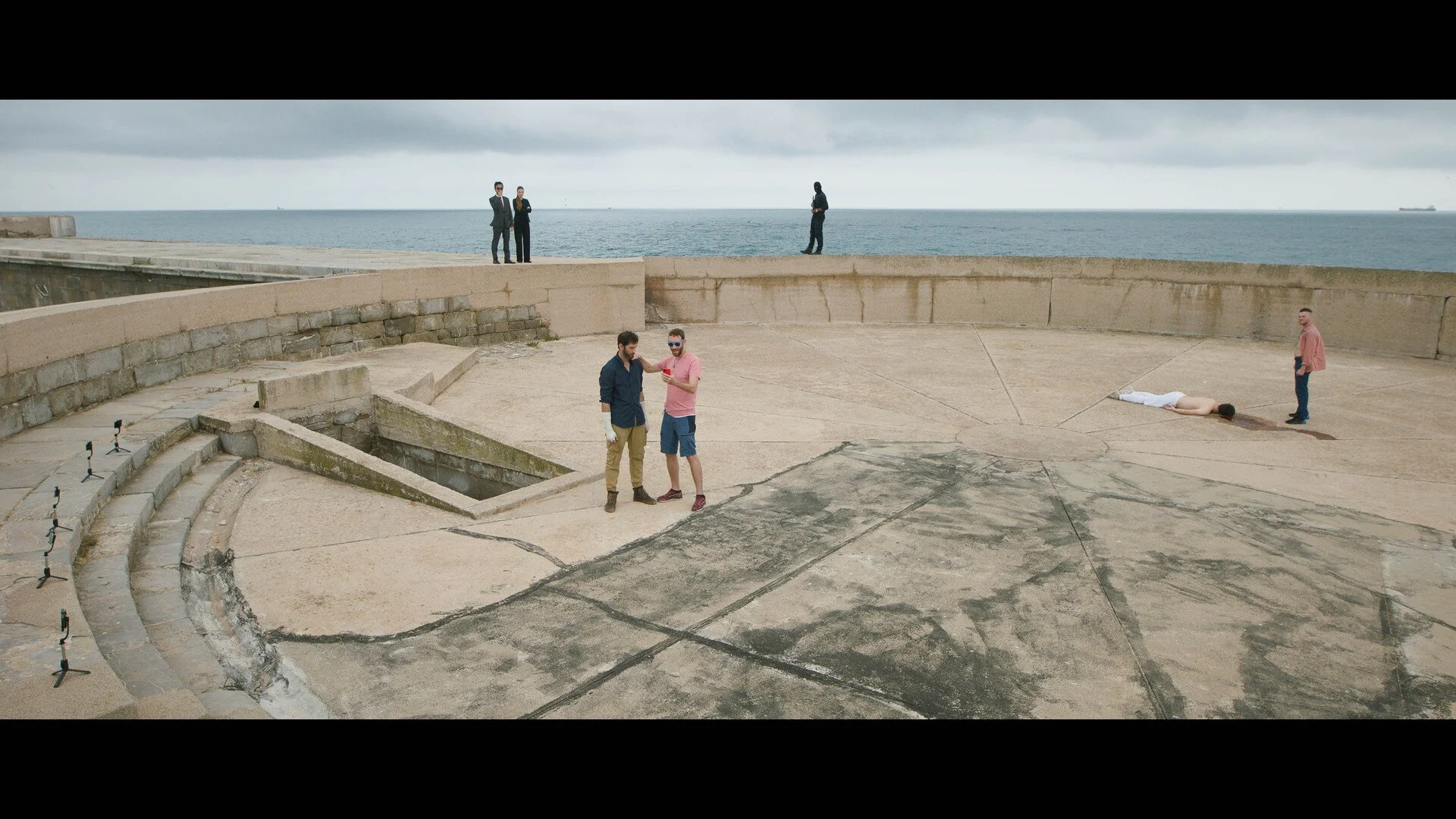
Image Courtesy of Adrien Jeannot
How did you do the location scouting for Beyond the Line?
Location scouting was the most complicated part. For me, the location is one of the most important aspects of a movie: it has to feel like one of the main characters. I spent a year searching in the south of France for a place that was isolated or difficult to access, but with a strong identity. I was turned down at every location or offered rental prices that were far too high. I even considered looking abroad or canceling the shoot altogether.
Then, two months before filming, I went on holiday to my mother’s in Sète. From her terrace, you can see the port. Opposite the port, I noticed this immense breakwater, three kilometers long. Families were having barbecues and swimming there. I thought to myself, “If access is free, the town must be flexible about the location.” So I applied to the city’s film department, which immediately said yes. But three weeks before filming, a city official called and said, “Sorry, but we need the port’s approval. Don't worry the port director is aware, just give him a call.” We were very well received.
How did you collaborate with Emeric Juliot on cinematography?
Emeric and I have been working together for six or seven years. We know each other very well. We've already made a short film together and we started a production company together five years ago: Azur Films. We mainly make corporate films and commercials. We understand each other perfectly and we like to work efficiently. We sometimes share the camera, especially in fight scenes where we quickly get out of breath with a 15kg camera on our backs.
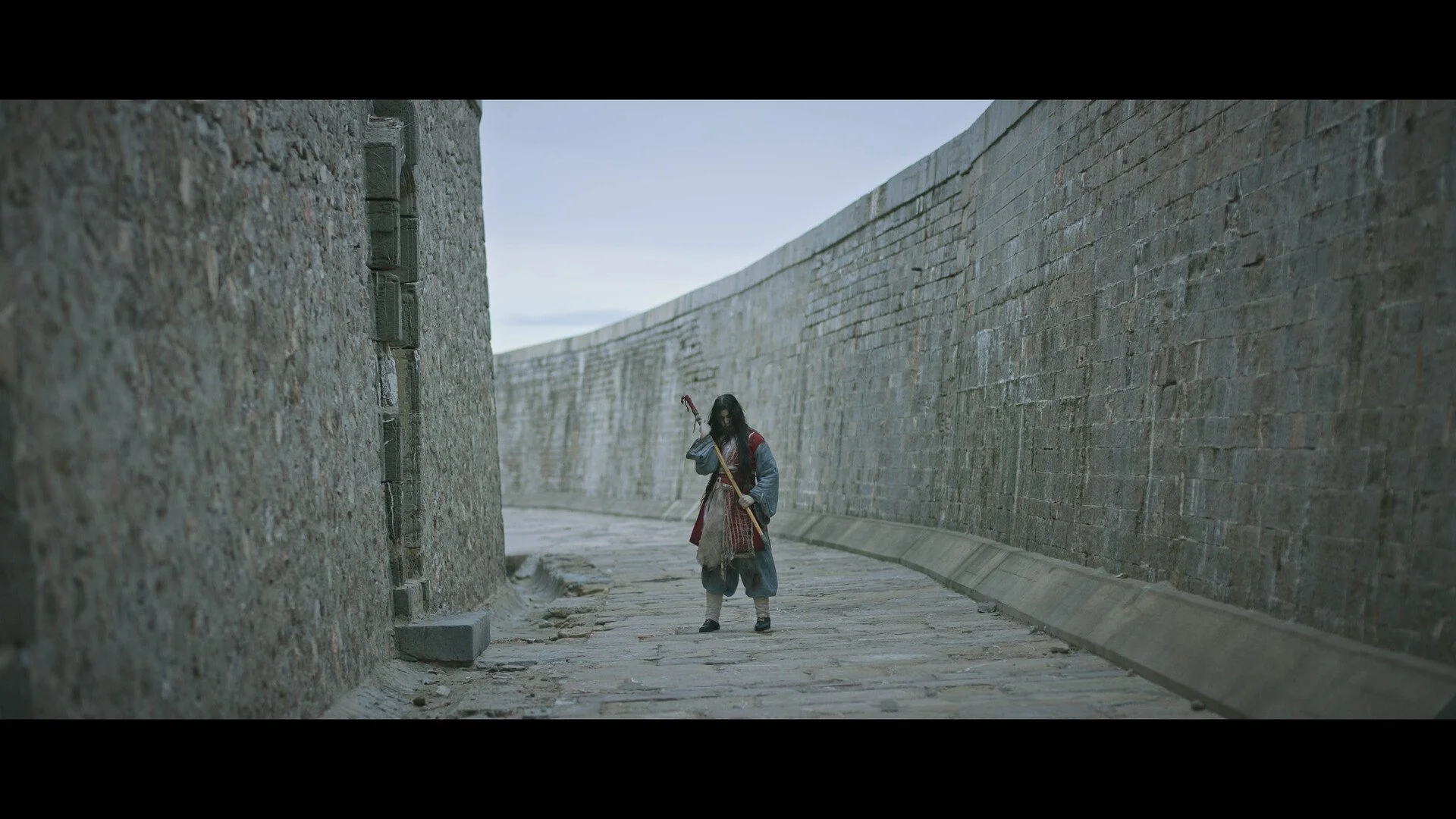
Image Courtesy of Adrien Jeannot
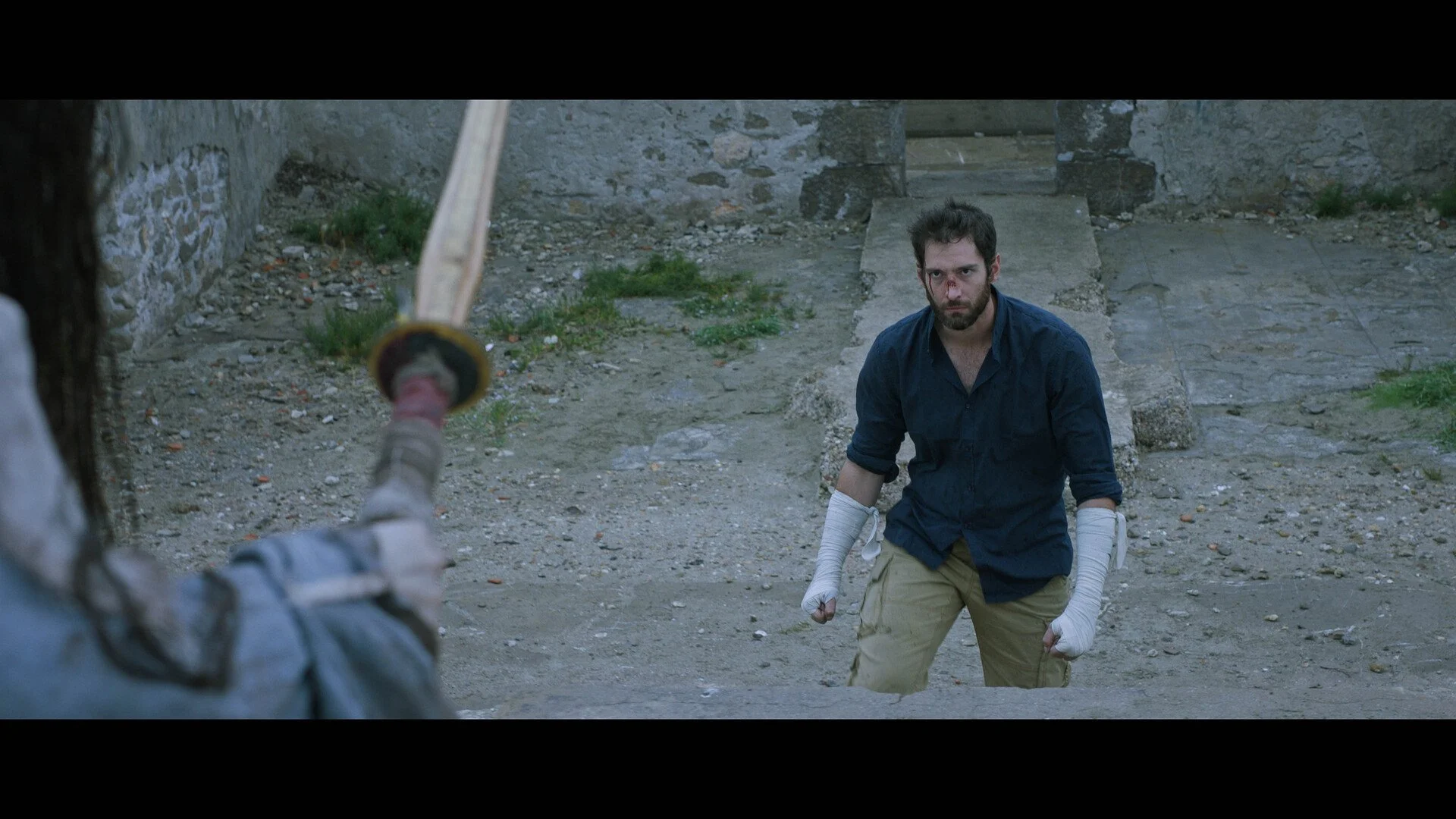
Image Courtesy of Adrien Jeannot
Can you talk about the costuming that was done by Cie Taprobane?
Taprobane is Julie's live performance company. She creates all of her own costumes for every show and she's exceptionally talented at making props and accessories. We discussed designing her costume, and I brought references from medieval action Chinese films. I wanted her character to feel completely timeless. And for this fight scene, I wanted to offer something entirely different from what is usually seen in short films or even in French cinema.
How did you work with Adrien Jeunemaitre on creating the fight sequences?
Dimitri had already worked with Adrien. He's a stunt coordinator but also a Wing Chun Kung Fu Master, so Dimitri immediately thought of him. We offered him the project, and he was very enthusiastic. Since they were both in Paris, I gave them photos of the sets, measurements, etc., so they could simulate the space in a rehearsal room. We discussed in detail what the fight should be like and how it was structured narratively. They spent a week working on it. The main challenge was the length of the fights. When you only have four days of shooting for an entire film, filming a single minute of pure combat outdoors can quickly become a headache and exhaust your actors.
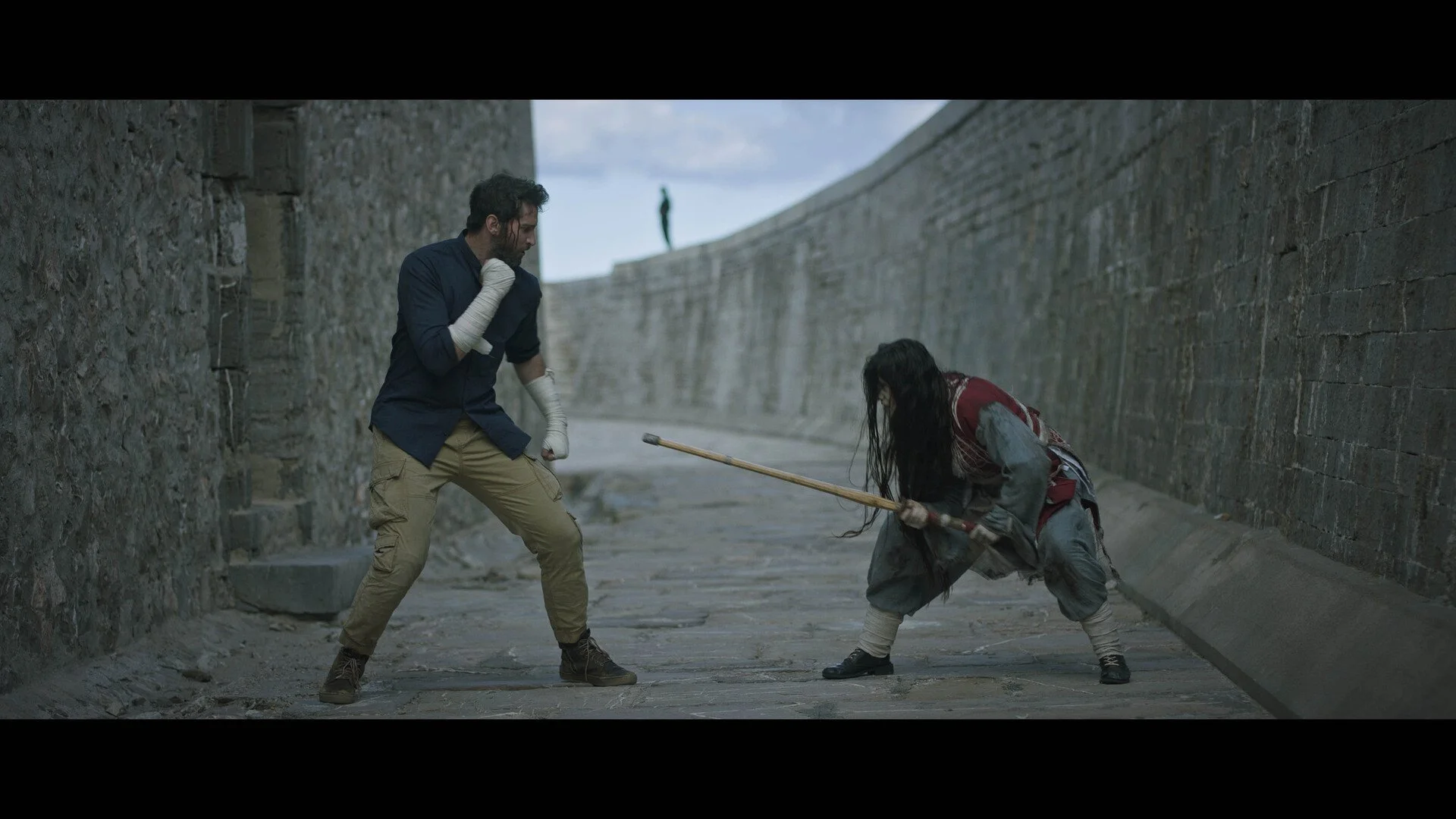
Image Courtesy of Adrien Jeannot
What was the best part of filming Beyond the Line?
The best part for me was the Speaker's segment, a wild character with completely uninhibited dialogue that most people wouldn’t dare use. We laughed a lot. William perfectly captured the tone i was looking for. He breaks the gravity of what we’re watching, these death matches, and plunges us into the frenzy of social media.
What was the most challenging part of filming Beyond the Line?
Obviously, the fights. On such a small production with very few shooting days, you have to stay pragmatic and focused. You also need to be careful with the actors, who get tired quickly. We don’t want anyone to get injured. Even for Emeric and me, operating the camera, filming fights handheld for two full days is exhausting, and we can’t afford any mediocre takes. The fight has to be believable, which often means doing as many takes as necessary.
On top of that, it was all in the open sea, since the breakwater isn’t connected to the shore. We had to make numerous trips back and forth by boat.
What’s your favourite part of the final edit?
I love the final part of the fight between Dimitri and Julie. The climax. The intensity, the music, the location, the social media. It all comes together perfectly. It's as if something else, something bigger, is at play in this fight.
That’s the kind of feeling I want in a movie.
What’s the best feedback you received for Beyond the Line?
A great producer said to me after a screening of the film: "And you (Azur Films) made it all by yourself?" In my opinion, the only way to make that kind of movie in France is independently and freely. This meant working with a very limited budget and a small shooting crew. But I didn’t want to compromise on the quality of the sets, the actors, or the fight scenes. I’ve always made low-budget films, and I think I push the boundaries of what can be achieved with so little each time. Yet, if it doesn’t resonate with the audience, it’s meaningless. Hearing people laugh in the theater and receiving positive feedback from other professionals is incredibly encouraging.
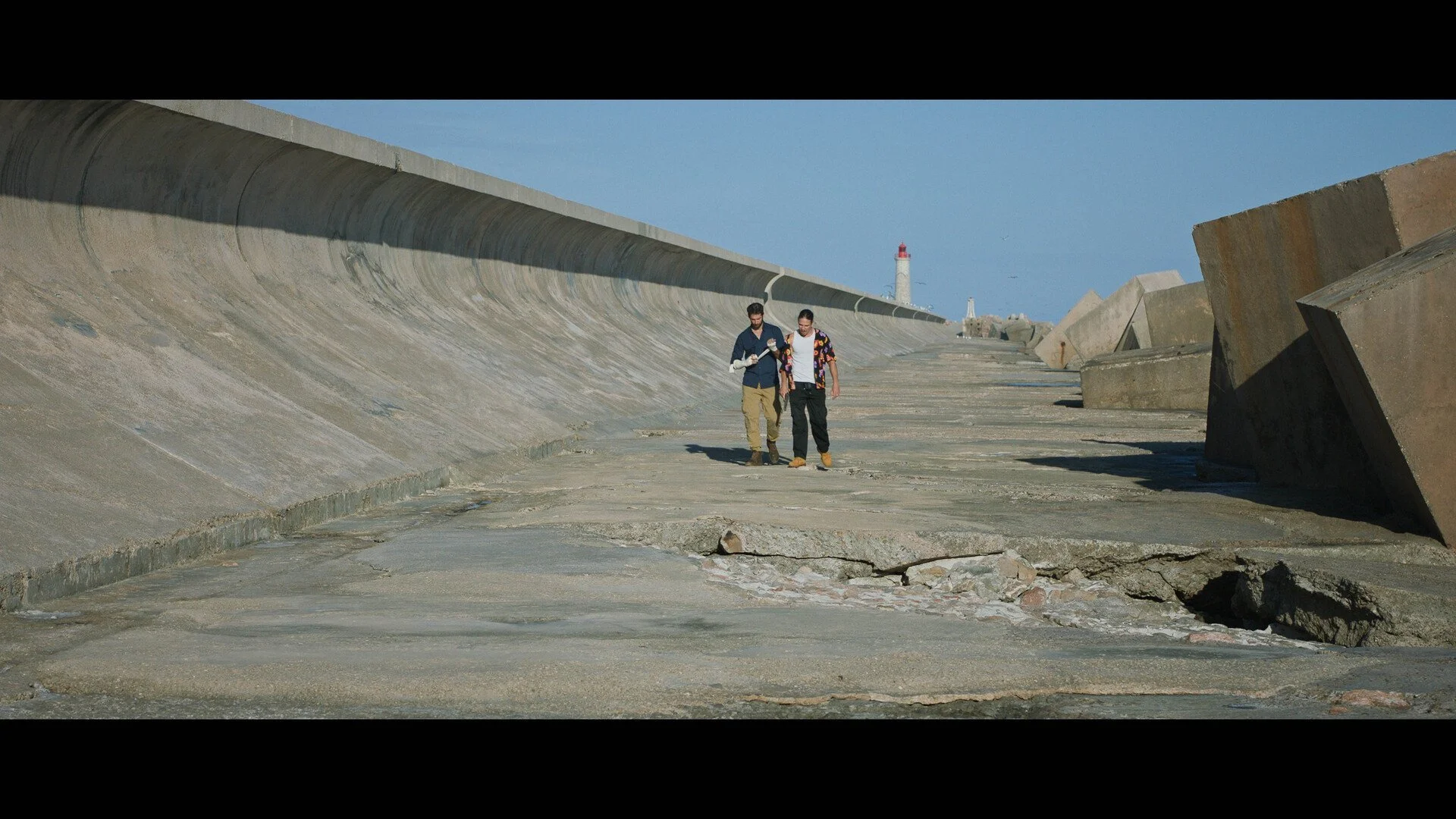
Image Courtesy of Adrien Jeannot
What do you hope audiences take from watching Beyond the Line?
I hope they'll be entertained first and foremost. And if it can broaden their perspectives on how they consume images on social media, then I've done my job well. And remember the actors of course! Their characters. They did a phenomenal job.
Do you have any upcoming projects you can tell us about?
Not at the moment. We are actively thinking about making a feature film. Same issue here: I want to make genre films and I want to tell stories that are different from what we see in France. So maybe a low budget feature ! I'm considering this approach and the viability of this kind of project. With AI becoming increasingly prevalent and platforms concentrating the majority of productions, I'm questioning the future of my profession and how to practice it.
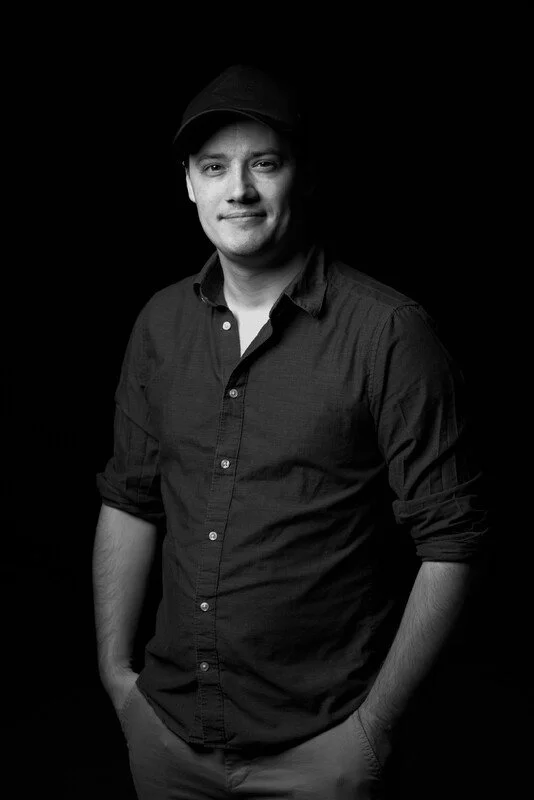
Image Courtesy of Adrien Jeannot
Keep Up To Date with Adrien Jeannot
Follow Him on Instagram
Keep Up To Date with Azur Films
Follow Their Instagram
Subscribe To Their YouTube Channel
Check Out Their Website
The Deadline for Submissions for Fighting Spirit Film Festival 2026 is May 4th. We accept both short and feature length martial arts/action films. To submit your film or for more information, head over to our filmfreeway.
-
April 2026
4
- 28 Apr 2026 Interview with “A Tribute To Richard Norton” Director Nathanael Hopkins-Smith 28 Apr 2026
- 28 Apr 2026 Interview with “Chakravyuh - Prologue” Director Hello Everyone 28 Apr 2026
- 28 Apr 2026 Interview with Playin' Around's Bryan Uvaldo 28 Apr 2026
- 3 Apr 2026 Interview with “Beyond the Line” Director Adrien Jeannot 3 Apr 2026
-
March 2026
1
- 26 Mar 2026 Interview with Ocean Whisperer’s Frances Katz 26 Mar 2026
-
February 2025
1
- 1 Feb 2025 Interview with “The Brothers Swap” Director Bruce Chong 1 Feb 2025
-
December 2023
1
- 1 Dec 2023 Jennifer Li Interview 1 Dec 2023
-
April 2023
1
- 17 Apr 2023 Interview with ‘Fighting For A Living’ Director Tanja Ploner 17 Apr 2023
-
February 2023
1
- 2 Feb 2023 Talking about Shaolin Blues with Ryan McCrory 2 Feb 2023
-
December 2022
1
- 4 Dec 2022 Interview with Kickstart My Heart's Kelsey Bollig 4 Dec 2022
-
March 2022
1
- 16 Mar 2022 Interview with Stunt Performer, Stunt Coordinator, Actor and Filmmaker Tim McLachlan 16 Mar 2022
-
January 2022
1
- 18 Jan 2022 Interview with Animator Emory Rice 18 Jan 2022
-
December 2021
1
- 10 Dec 2021 Interview with ‘Duty - Out of Line’ Filmmaker Felix Fukuyoshi Ruwwe 10 Dec 2021
-
August 2021
2
- 20 Aug 2021 Interview with Yasushi Asaya 20 Aug 2021
- 13 Aug 2021 Nito Larioza Interview 13 Aug 2021
-
July 2021
2
- 29 Jul 2021 Interview with Dimitri Kanjuka 29 Jul 2021
- 15 Jul 2021 Interview with Sam Bradford 15 Jul 2021
-
June 2021
1
- 24 Jun 2021 Interview with Tanguy Guinchard 24 Jun 2021
-
February 2021
2
- 21 Feb 2021 Interview with Peps Goh 21 Feb 2021
- 13 Feb 2021 Interview with Just A Girl's Claudia Grace McKell 13 Feb 2021
-
November 2020
1
- 24 Nov 2020 Interview with Stuntwoman Kayley Carrigan 24 Nov 2020
-
October 2020
1
- 12 Oct 2020 Interview with Budokai-do's A'an Yayak 12 Oct 2020
-
May 2020
2
- 21 May 2020 Interview with Dead End II’s Bryan Larkin 21 May 2020
- 1 May 2020 Interview with Alix Austin and Keir Siewert of 'Duchess' 1 May 2020
-
April 2020
5
- 22 Apr 2020 Interview with Max Repossi 22 Apr 2020
- 17 Apr 2020 Interview with ‘The Memory of Ink’ Writer-Director Mark Kamara 17 Apr 2020
- 14 Apr 2020 Interview with Kiwami Filmmaker and Actor Jon Alagoa 14 Apr 2020
- 3 Apr 2020 Interview with ‘The Kid’ Writer-Director Nicholas Wenger 3 Apr 2020
- 1 Apr 2020 Interview with ‘Whirlpool’ Director Brian Stynes 1 Apr 2020
-
March 2020
1
- 8 Mar 2020 Interview with 'The Misadventures of Lefty Deadeye' Filmmaker Marco Sinigaglia 8 Mar 2020
-
February 2020
1
- 26 Feb 2020 Interview with 'Oregu' Filmmaker Marina Ivaničeva 26 Feb 2020
-
January 2020
1
- 9 Jan 2020 2019 notes from Director/Co-Founder Soo Cole 9 Jan 2020
-
December 2019
1
- 29 Dec 2019 Interview with 'Sensei Fran Kicks A**' Director Simone Fary 29 Dec 2019
-
November 2019
1
- 12 Nov 2019 Vlog - A look at 88 Films new ‘The Protector’ Blu-Ray 12 Nov 2019
-
October 2019
1
- 2 Oct 2019 Interview with 'Tiger Claw' Director James Cotton 2 Oct 2019
-
May 2019
2
- 9 May 2019 Interview with 'Chopsticks!!' Shinji Ishigaki 9 May 2019
- 3 May 2019 Interview with Jacky Dunnes 3 May 2019
-
April 2019
8
- 28 Apr 2019 Interview with Allen Gewa 28 Apr 2019
- 27 Apr 2019 Interview with Bryan Larkin Part Two 27 Apr 2019
- 22 Apr 2019 Interview with Bryan Larkin Part One 22 Apr 2019
- 21 Apr 2019 Interview with Beau Fowler 21 Apr 2019
- 18 Apr 2019 Interview with 'Chopsticks!!' Aeddan Sussex 18 Apr 2019
- 11 Apr 2019 Interview with Leif Johnson 11 Apr 2019
- 8 Apr 2019 Interview with 'Blood Hunters' Vincent Soberano 8 Apr 2019
- 4 Apr 2019 Interview with Linda Louise Duan 4 Apr 2019
-
March 2019
7
- 31 Mar 2019 Interview with 'Tranh et Nowak' Geneviève Doang Part Two 31 Mar 2019
- 28 Mar 2019 Interview with ‘Tranh et Nowak’ Geneviève Doang Part One 28 Mar 2019
- 22 Mar 2019 Interview with Jesse V. Johnson 22 Mar 2019
- 18 Mar 2019 Announcement: Master Z: Ip Man Legacy 18 Mar 2019
- 13 Mar 2019 Interview with ‘Tranh et Nowak’s’ Quentin d'Hainaut 13 Mar 2019
- 8 Mar 2019 Fighting Spirit Presents the UK Premiere of Triple Threat 8 Mar 2019
- 6 Mar 2019 Interview with ‘Les aventures de Tranh et Nowak’ Godefroy Ryckewaert 6 Mar 2019
-
February 2019
1
- 26 Feb 2019 Interview with 'Steam' Pau Han Kho 26 Feb 2019